Septic Services for Country Homes and Remote Properties

Country living has a way of teaching people how many systems they rely on without thinking about them. Power, water, road access, drainage, heating, internet, propane delivery, well pumps, and waste management all sit quietly in the background until one of them stops doing its job. Of all those systems, the septic system tends to be the least visible and the least understood, right up until it becomes the most urgent problem on the property.
That is especially true for country homes and remote properties. A suburban homeowner with municipal sewer rarely needs to think about where wastewater goes after it leaves the house. A family living ten miles outside town, on a wooded lot with a private well and a long gravel driveway, does not have that luxury. Their wastewater treatment happens on site, in soil conditions that may change with the seasons, under service conditions that are often more difficult than people expect. In those settings, good septic services are not a convenience. They are part of basic property stewardship.
The difference between a septic system that runs quietly for decades and one that becomes a recurring headache usually comes down to three things: design, access, and maintenance. Remote properties complicate all three. The soils may be rocky or shallow. The house may sit far from the road. Winter may lock the ground up for months. Service trucks may need to navigate steep grades, mud, gates, livestock, or old driveways not built for heavy equipment. These are ordinary realities in rural areas, and any article on septic services that ignores them misses the point.
What makes rural septic care different
At first glance, a septic system on a country property works the same way as one on a lot in a more developed area. Wastewater leaves the home, solids settle in the tank, liquid effluent moves onward, and the drain field finishes the treatment process through the surrounding soil. The principles are straightforward. The operating conditions are not.
Remote homes often see irregular occupancy. A hunting cabin may sit empty for weeks, then host eight people over a long weekend. A farmhouse may support a large family, livestock chores, frequent laundry, and heavy kitchen use every day of the year. A vacation rental may cycle between vacant periods and full bookings. Septic systems do not love extremes. They perform best when flow is fairly predictable. Sudden surges can stir solids in the tank and overload downstream components. Long periods of disuse can create their own issues, especially if pumps, alarms, or filters are part of the setup.
Then there is geography. In town, a service provider may travel ten minutes on paved roads, park close to the tank, and complete a routine pump-out with little trouble. In the country, that same service call might involve narrow roads, seasonal bridges, soft shoulders, locked gates, poor cell service, and a tank buried deeper than expected under years of landscaping or gravel. If the property owner does not know where the tank lids are, an hour can disappear before any actual septic work begins.
That is why rural septic services often include more than pumping. Field locating, riser installation, baffle checks, filter cleaning, line inspection, access planning, and troubleshooting all matter more when a property sits far from town. A remote homeowner benefits from a provider who thinks like a field operator, not just a truck operator.
The systems commonly found on country properties
Many rural homes still use conventional gravity systems, which are the simplest to understand and often the easiest to maintain if the soils are suitable. Waste flows from the house to the septic tank, then out to a drain field by gravity. When these systems are properly sized and protected from abuse, they can perform very well for a long time.
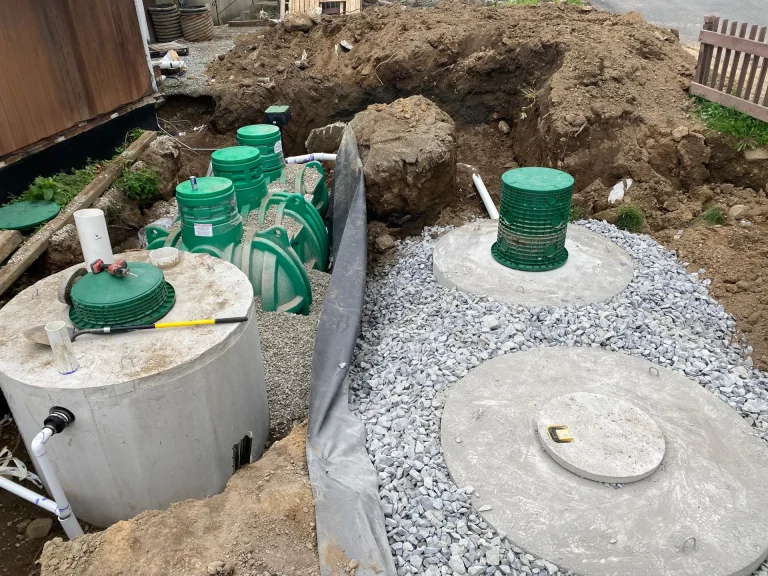
But a lot of country land is not ideal. Heavy clay, shallow bedrock, high water tables, steep slopes, or limited buildable space may require alternatives. Pressure distribution systems, mound systems, sand filters, aerobic treatment units, and pump chambers are all common in rural and remote settings. Each adds another layer of service needs. Pumps fail. Floats stick. Alarms sound. Effluent filters clog. Distribution laterals need balancing. A homeowner who assumes every septic system is just a buried tank and some pipe can get caught off guard quickly.
One practical problem I have seen again and again is that owners of older rural properties often do not know exactly what they have. The house may have changed hands several times. The original permit paperwork may be missing. An addition may have increased bedroom count years after installation. The owner knows there is a septic tank somewhere, but not whether there is a pump chamber, a second tank, a dosing schedule, or a replacement field area reserved on the lot. Good septic services begin with identifying the system before trying to solve its symptoms.
Why access matters more than most owners expect
On a remote property, the hardest part of a septic service call is not always the septic system. It may be getting the truck where it needs to go.
A loaded pump truck is heavy. Even a smaller unit can stress a narrow driveway or sink into saturated ground. If the access road crosses a culvert that has not been maintained, a driver may stop well short of the tank. Hose length can solve some distance problems, but not all. Long pulls take more time, reduce efficiency, and create their own risks if the route crosses landscaping, fences, or rough terrain. In heavily wooded areas, low limbs and tight turns matter. In winter climates, snowbanks and ice can turn an ordinary job into a delayed one.
For that reason, one of the smartest investments a rural homeowner can make is not glamorous at all. It is clear, durable access. Mark the tank lids. Install risers to grade if local code and site conditions allow. Keep the route firm enough for service vehicles. Trim overgrowth before it becomes a visibility issue. Make sure gates are wide enough and unlocked on service day. These details shave real time off a call, and in emergency situations that time matters.
There is also a cost angle here. A straightforward pump-out is one price. A pump-out that requires digging frozen ground to locate a buried lid, or hauling hose across a difficult lot because the truck cannot get close, can cost more. Not because the provider is difficult, but because the job genuinely takes more labor and equipment coordination.
The maintenance rhythm that keeps systems healthy
The phrase “out of sight, out of mind” describes how many people treat their septic system, and it is one of the most expensive habits in rural homeownership. Septic maintenance works best as routine, not rescue.
For most full-time homes with conventional systems, pumping every three to five years is a reasonable starting range, but that is only a starting range. Tank size, occupancy, water use, garbage disposal habits, and whether the home is full-time or seasonal all change the schedule. A two-person household in a large tank may go longer. A family of five with frequent guests may need service sooner. If the home has an effluent filter, it should be checked and cleaned on a schedule that matches actual use, not wishful thinking.
A tank should not be pumped just because a calendar says so, nor ignored because it “seems fine.” The better practice is inspection-based maintenance. Measure sludge and scum levels. Check inlet and outlet baffles. Look for signs of backflow, corrosion, root intrusion, or abnormal liquid levels. Confirm whether the drain field is accepting effluent normally. A good technician can learn a great deal from a routine visit, and catching a problem early is almost always cheaper than waiting for wastewater to surface in the yard or back up into the house.
Remote property owners also need to think seasonally. If access is difficult in late winter or spring thaw, do not wait for an emergency in those periods. Schedule service when the site is most accessible. If a vacation cabin sees heavy summer use, inspect it before the season starts rather than after problems appear on a busy holiday weekend. Septic systems have their own calendar, and it is smarter to work with that calendar than against it.
Water use habits that matter more in the country
Rural homeowners often assume septic problems are mostly about the tank. In practice, daily water behavior inside the house is just as important, sometimes more important.
A septic system can only process so much water over a given period. A country home with a private well may not get a monthly water bill, which means there is less feedback on usage. That can lead to hidden overload. Running multiple laundry loads back to back, hosting a full house for several days, taking long showers, and ignoring leaking toilets can flood a drain field with more water than it can absorb properly. A single running toilet can send hundreds of gallons a day into a system. On a municipal sewer connection that is wasteful. On a marginal rural drain field, it can push the https://damiencjdw848.yousher.com/septic-services-and-home-renovations-what-to-consider system into failure.
This is where septic services overlap with general property management. A homeowner who keeps plumbing fixtures in good repair, spaces out water-heavy chores, and pays attention to unusual wet spots outdoors is doing more for the septic system than someone who only calls for help after a backup.
The same goes for what enters the tank. Wipes, grease, feminine hygiene products, paper towels, cat litter, and harsh quantities of antibacterial or caustic products all create avoidable trouble. Most seasoned service technicians can tell a lot about household habits from what they find in a tank. Systems do not fail in mysterious ways nearly as often as owners imagine. They usually fail in very ordinary, very human ways.
Cold weather, wet seasons, and other rural stress tests
Remote properties often experience the full force of the local climate. That matters for septic performance.
In cold regions, deep frost can create problems if the system has shallow piping, sparse snow cover, compacted soils above components, or low winter usage. A year-round country house usually keeps enough warm water moving through the system to help, but a cabin that sits empty for stretches is more vulnerable. Freeze-ups can occur in house lines, pump lines, distribution piping, or around treatment components. Once frozen, access and repair become slower and more expensive.
Wet seasons create a different set of pressures. Heavy rain and snowmelt can saturate soils, especially on low-lying lots or clay-heavy sites. A healthy drain field still needs unsaturated soil to finish treatment. If groundwater rises too high, the system loses that treatment capacity. Owners sometimes interpret this as “the tank is full again already,” when the real issue is that the field cannot accept flow under current site conditions. Pumping may offer temporary relief if the tank is overfull, but it does not fix a waterlogged field.
Drought has its own quirks. Extremely dry soils can shrink and crack in some regions, altering flow patterns. More commonly, drought changes occupancy patterns and water use, especially on seasonal properties where people conserve heavily for a while, then return to normal or high use. Septic systems notice these shifts.
A provider with rural experience will factor weather and site history into recommendations. That kind of judgment matters. The right answer in February is not always the right answer in August.
Warning signs owners should not ignore
The first signs of septic trouble are often small enough to rationalize away. A toilet gurgles once. A sink drains slowly after a weekend with guests. There is a faint odor near the tank area after heavy rain. A strip of grass looks greener than the rest of the yard. None of these signs proves failure on its own, but together they deserve attention.
If drains throughout the house slow down at once, or fixtures gurgle when other fixtures are used, the issue may be in the building sewer, tank, or downstream system. If sewage odors persist indoors or near the field, do not wait. If wastewater is surfacing outdoors, keep people and pets away from the area and call for service promptly. Surface breakout is more than an inconvenience. It is a sanitation issue.
One practical challenge on large country lots is that owners may not notice developing field problems quickly because they do not regularly walk the entire area. Mowing patterns, outbuildings, fences, and natural vegetation can hide symptoms. It pays to inspect the septic area visually now and then, especially after storms or periods of heavy use.
Choosing a provider for remote septic work
Not every company that pumps tanks is equally equipped for country properties. Distance, equipment type, scheduling discipline, and site knowledge all matter.
When I hear homeowners describe their best experiences with septic services, they usually mention communication before they mention price. They appreciate a provider who asks where the tank is, what kind of access exists, whether lids are exposed, how far the driveway is from the county road, and whether there are gates, dogs, livestock, or poor turnarounds. Those questions signal competence. Rural service is logistics as much as mechanics.
The right provider will also be candid about limits. If the truck cannot safely reach the site under current conditions, a good company says so before getting stuck. If the system needs more than pumping, they explain what they observed and what should happen next. If records are missing, they help piece the system together rather than making assumptions.
Here are a few things worth asking when hiring septic services for a country or remote property:
- Do you regularly service properties with difficult access or seasonal road conditions?
- Can you inspect baffles, filters, and liquid levels during pumping, not just empty the tank?
- Will you help locate lids or recommend risers if the system is hard to access?
- Are you familiar with the kinds of alternative systems common in this area?
- What information should I have ready before the appointment?
Those questions often tell you more than a generic price quote does. A company that answers them clearly is usually easier to work with when conditions are less than ideal.
Costs, repairs, and the value of catching problems early
Septic costs vary widely by region, system type, and travel distance. That is especially true in remote areas, where fuel, drive time, and equipment wear are real parts of the job. A routine pump-out for an accessible conventional tank is one category of expense. Diagnostic work, excavation to expose buried lids, emergency calls after hours, pump replacement, frozen line repair, or drain field troubleshooting are very different categories.
This is why deferred maintenance is such a poor bargain. Owners sometimes avoid a few hundred dollars in scheduled service, only to face several thousand in corrective work later. A failed effluent pump, a blocked outlet baffle, or neglected filter cleaning can cascade into broader system stress. If solids leave the tank and reach the field, repair options become more painful. Sometimes the field can recover with prompt correction. Sometimes it cannot.
There is also the hidden cost of disruption. On a remote primary residence, septic failure means immediate household impact. On a vacation rental, it can mean canceled bookings, refunds, bad reviews, and a compressed repair timeline in peak season. On a hunting camp before opening weekend, it can throw the entire trip into chaos. Septic systems do not fail at convenient moments.
Special considerations for seasonal cabins and off-grid homes
Seasonal and off-grid properties deserve their own mention because their use patterns are so different from those of ordinary homes.
A cabin that sits vacant for much of the year may have lower total wastewater volume, but that does not automatically mean fewer septic concerns. Intermittent use can hide problems because the system is not tested consistently. Owners arrive, use it hard for three days, leave, and assume everything is fine because no one is present long enough to see slow recovery or lingering field saturation. If the property is winterized, reopening introduces another moment when plumbing and wastewater systems should be checked carefully.
Off-grid properties also sometimes pair septic systems with water-saving fixtures, composting setups, or low-flow realities that change tank behavior. Lower water use is usually helpful, but not if it leads to insufficient carry in lines or confusion about what type of wastewater the system still receives. Mixed-use setups require clear understanding. A provider should know whether the property has only blackwater entering the tank, reduced graywater, or any specialty components that affect maintenance intervals.
Properties with generators, solar arrays, or battery backup may also have pump-dependent septic components. That means power reliability becomes part of wastewater management. If a lift pump or aeration unit loses power for long periods, performance suffers. Remote owners who monitor energy systems carefully should include septic components in that thinking.
Good records make ownership easier
One habit separates smooth septic ownership from chaotic septic ownership more than people realize: keeping records. On rural properties, memory is not enough.
Know where the tank, lids, cleanouts, pump chamber, and drain field are located. Keep copies of permits, as-built drawings, inspection notes, pumping dates, and repair invoices. If a filter was installed, note its type and service history. If the driveway is weight-limited during spring thaw, write that down too. The next service technician should not have to start from zero every time.
This matters during property sales as well. Buyers of country homes are often more cautious now than they were years ago, and for good reason. A documented septic history reassures them. It shows the system was treated as infrastructure, not ignored until something smelled bad.
Stewardship is the real job
Country homes ask more of their owners than homes tied into municipal utilities. That trade-off is part of the appeal for many people. More land, more privacy, more independence, and more responsibility all arrive together.
A septic system is one of the clearest examples of that bargain. It is not glamorous. It does not improve curb appeal. It will never be the feature guests admire. But when it is designed properly, accessed easily, and maintained on schedule by capable septic services, it does its work quietly for years. That quiet reliability is worth a great deal on a remote property.
The owners who have the fewest emergencies are rarely the lucky ones. They are the ones who know what system they have, keep records, pay attention to water use, prepare the site for service access, and call for maintenance before trouble turns public. Rural septic care rewards practical habits. In the country, that tends to be true of most things that last.
Excavating New Jersey LLC
Address: 406 County Rd 565, Wantage, NJ 07461
Phone number: +19737914284
FAQ About Septic Services
What is the average cost to get a septic tank emptied?
Emptying a septic tank costs between $290 and $560 on average, with most homeowners paying about $420. Prices vary based on tank size.
What is septic service?
Septic service inspects, pumps, cleans, and maintains a septic tank. A septic tank is a large, underground container that collects and treats wastewater from your home. Over time, sludge, scum, and other debris, like hair and solids, can build up in your tank and clog your drain field.
How often should you have a septic tank serviced?
A standard septic tank should be inspected every 1 to 3 years and pumped every 3 to 5 years. However, the exact schedule depends on your tank's capacity, household size, and daily water usage.